Solar Powering Sustainability at the MLN Screening Facility
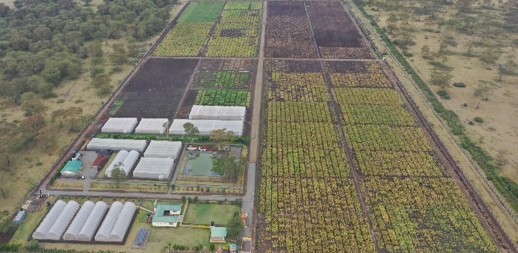
Dr. Suresh, L.M. (26th November, 2025): The MLN Screening Facility—one of the world’s largest and most advanced phenotyping hubs—has supported Africa’s fight against Maize Lethal Necrosis for over a decade, supporting more than ten NARES, twelve private seed companies, and the CGIAR system. With over 250,000 germplasm and 400,000 rows screened in ten years, the facility relies heavily on reliable irrigation, making power a major cost driver.
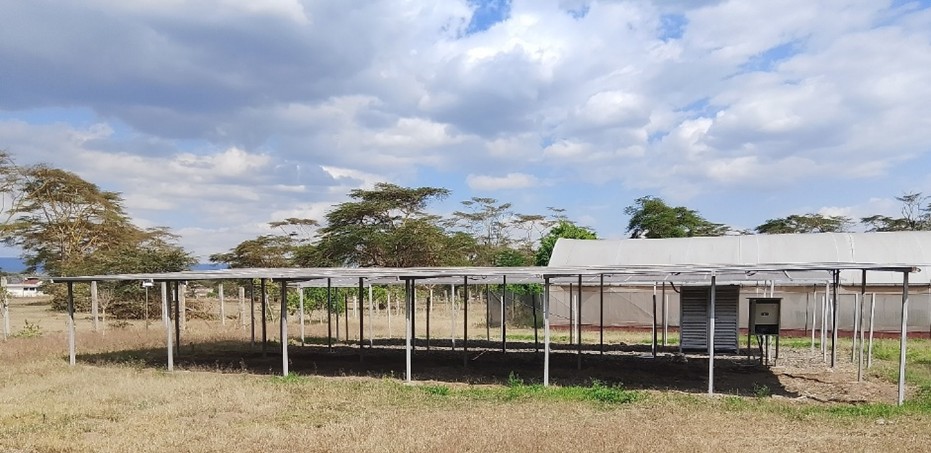
Figure 2: Solar panels set up at MLN screening facility
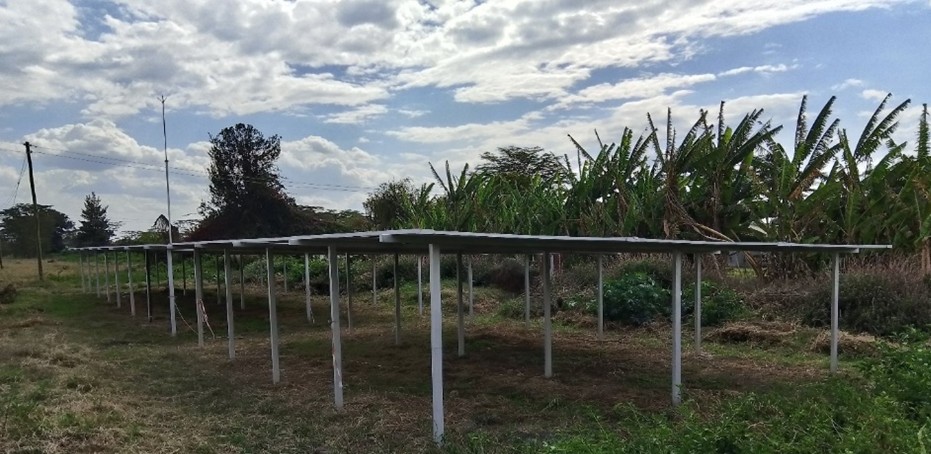
Figure3: Solar Panels at Borehole site at KALRO -CIMMYT area
To secure long-term sustainability, a comprehensive solar power system was commissioned in early 2025 with USD 30,000 support from CtEH. Two solar units were installed: Set-up 1 at the borehole site with 75 panels generating 41.25 kW, fully powering the 30 kW Ebarra motor / Grundfos motor used to pump water to the 20-ha MLN field. Set-up 2 at the screening site includes 45 panels generating 24.75 kW, supporting the 18 kW drip irrigation pump, 22 kW sprinkler system, and smaller pumps supplying the greenhouse and laboratory. The impact has been transformative. Before solar installation, monthly electricity consumption averaged 3,883.75 kWh at the borehole site and 2,341 kWh at the facility site, with a total electricity bill of ~USD 2,800. Since commissioning solar, consumption has dropped dramatically to 3.6 kWh at the borehole and 951.7 kWh at the site, reducing monthly costs to USD 219—a savings of more than USD 2,500 per month and over USD 30,000 annually, effectively recovering the full investment in the first year. Beyond cost savings, the solar system now guarantees uninterrupted irrigation, stable operations, and resilience against power outages, strengthening the reliability and scientific precision of MLN phenotyping. The facility is now cleaner, greener, more cost-efficient, and better positioned to deliver MLN-resistant maize varieties for Eastern and Southern Africa.